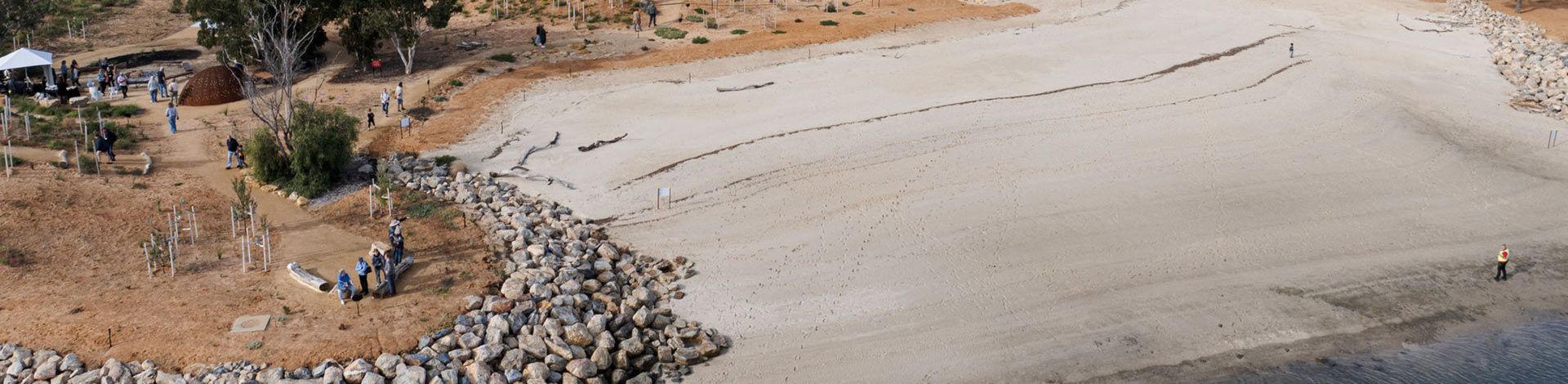
A nature-based approach to restoring the coast by re-establishing mangroves, saltmarsh and coastal dune plants
The living shoreline provides habitat for local wildlife, improve water quality and reduce erosion, as young mangroves naturally take root and saltmarsh plants establish along the shoreline.
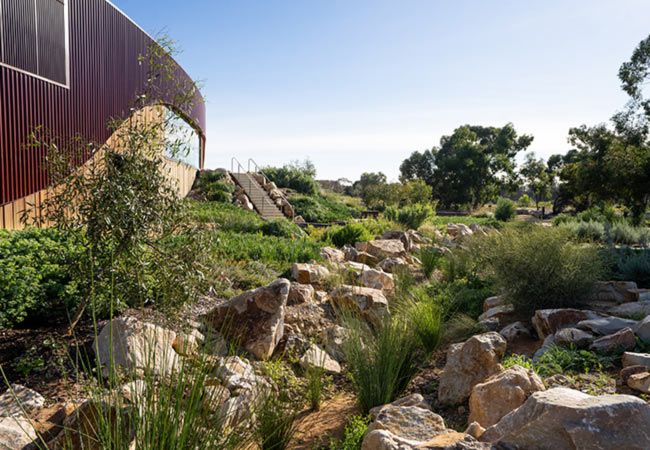
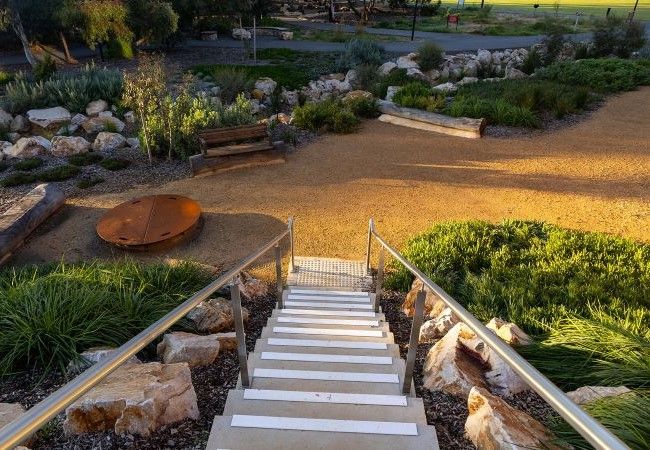
A key feature of Yitpi Yartapuultiku is the Living Shoreline, a nature-based approach to restoring the coast by re-establishing mangroves, saltmarsh and coastal dune plants. Over time, the living shoreline will provide habitat for local wildlife, improve water quality and reduce erosion.
Why a ‘Living’ Shoreline?
Living shorelines are a nature-based way to protect and restore our coastlines and riverbanks. They use natural materials, such as sand, rocks, shells and plants, to help reduce erosion and flooding while supporting healthy ecosystems. Unlike traditional structures such as seawalls and breakwaters, living shorelines provide habitat and food for fish and wildlife, support cultural and community values, and can be less expensive to maintain over time (Living Shorelines Australia 2022). They can also adapt to changing environmental conditions and have the ability to recover naturally after storms.
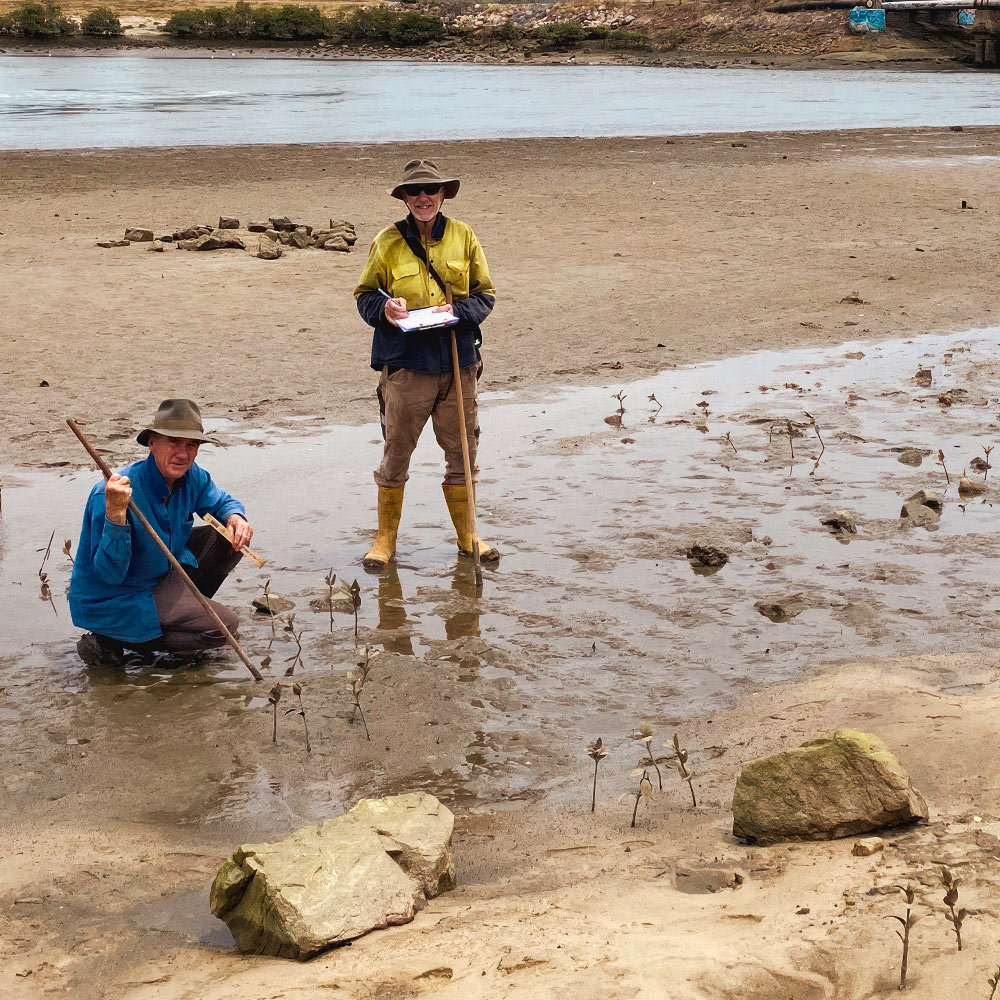
Left: Community members planting mangroves
Designed for resilience
The Yitpi Yartapuultiku Living Shoreline has been designed to help manage the impacts of rising river levels associated with climate change, in line with the Yitpi Yartapuultiku Climate Change Adaptation Plan. It will celebrate and strengthen the natural environment of Yartapuulti, supporting the ongoing protection and restoration of the Port River's unique ecology.
Over time, the Living Shoreline aims to create more habitat for shorebirds, mangroves, fish, native oysters and seagrass, while improving biodiversity and water quality in the Port River. These environmental benefits will also support Kaurna cultural values and objectives, helping to care for Country for future generations.
Living Shoreline Restoration
Since late 2024, Council staff, Friends of Port River, University of Adelaide and Trees for Life have been working together to restore a living shoreline at Yitpi Yartapuultiku.
Early efforts focused on transplanting 240 mangrove seedlings along the shoreline. While only a small number survived due to challenges such as barnacle growth on leaves, heat stress and human disturbance, encouraging signs of natural recovery are now emerging. Recent monitoring has identified naturally establishing mangrove seedlings, along with healthy mud and algae returning nutrients to the area.
A saltmarsh restoration trial is also underway. Coir mats have been installed along the shoreline to slow water flow and create favourable conditions for saltmarsh plants to establish. Some of these mats have been enriched with a natural nutrient mix to help restore essential nutrients that are currently lacking in the beach sand. This innovative approach is showing promising signs with saltmarsh plants such as Beaded Glasswort (Salicornia) growing on the mats. These efforts aim to support faster vegetation growth while helping stabilise the shoreline and rebuild this important coastal ecosystem. Check out this info sheet: LINK (pdf info sheet attached).
Visitors to the Yitpi shoreline may notice the coir mats along the water’s edge. Please avoid walking on them to help ensure the success of this important ecological restoration project. Early signs show how nature can recover with the right support, and this living shoreline will continue to grow and evolve over time.
A Healthy Country Plan to guide landscape management
A 10- year Healthy Country Plan has been developed to guide the long term management of the nine landscape zones including the living shoreline. The plan brings together Kaurna Traditional Ecological Knowledge with contemporary science to guide caring for Country.